
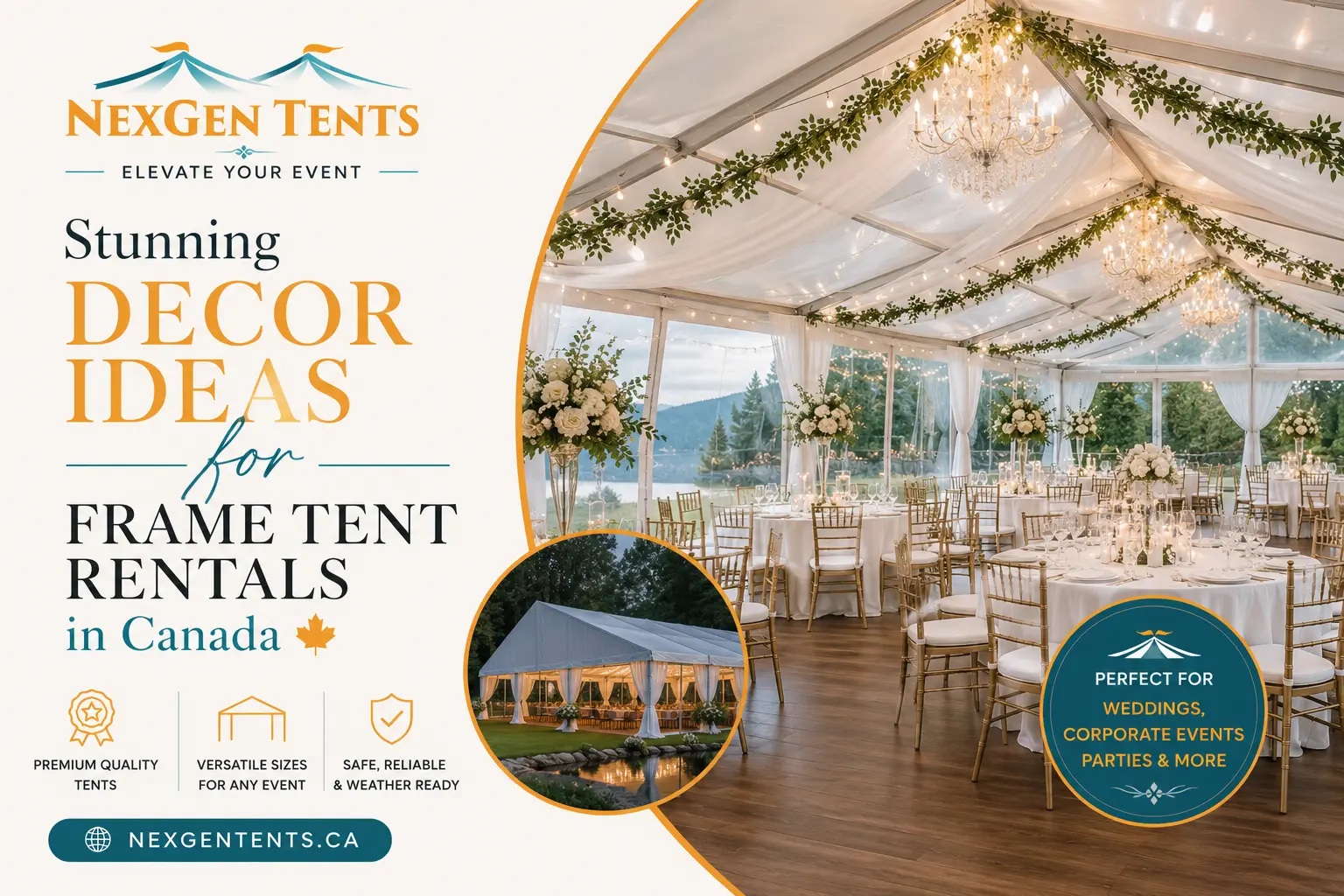
Outdoor events in Canada are a gamble. You can check the forecast ten times, but a sudden wind shift off the lakes changes everything. Traditional pole structures require staking deep into the ground. That limits you to grass. If your venue is a concrete plaza in Toronto or a paved driveway in Vancouver, stakes won’t work. We look at setups from a purely practical standpoint. You need stability, and you need space.
Planning Your Canadian Event with frame tent rentals
Choosing frame tent rentals changes how you layout the entire event. Traditional setups rely on center poles to hold the weight. Those poles end up dead in the middle of your sightlines, ruining seating charts and obstructing the view of the stage. Our structures move the support system entirely to the perimeter. You get an open room. Every square inch is usable. We anchor these setups using heavy weights when stakes aren’t an option. It works on asphalt, gravel, or manicured lawns without tearing up the ground. You get a clean floor plan.
Choosing the Right frame tent Size
Guessing your tent size usually leads to disaster. Rent something too small, and guests feel trapped. Rent something too large, and the atmosphere feels cold. A standard frame tent handles the wind load much better because the aluminum skeleton carries the tension, not the fabric.
We calculated these sizing baselines from real corporate events and weddings we have executed:
| Guest Count | Layout Style | Tent Dimensions | Space Provided |
| 40 – 50 | Seated dinner, no extras | 20′ x 30′ | 600 sq. ft. |
| 80 – 100 | Rounds, buffet, bar | 30′ x 60′ | 1,800 sq. ft. |
| 150 – 200 | Large stage, dance floor, seating | 40′ x 80′ | 3,200 sq. ft. |
Space vanishes quickly once you add a DJ booth or catering prep stations. Plan for the extras, not just the chairs. You also have to factor in Canadian weather extremes. In July, you might need heavy-duty portable AC units. In October, commercial heaters are mandatory. Those units take up physical floor space inside the perimeter.
Lighting Tips for Your tent frame rental
The bare metal rafter system inside a framed structure looks industrial. Some people like that. Most want to hide it. When you book a tent frame rental, you are buying flexibility. The overhead beams act as a built-in rigging grid. You can hang heavy decor pieces safely without worrying about collapse.
- Rigging green installations: We often run thick strings of local greenery along the main structural lines to break up the hard angles.
- Chandelier placement: You don’t have to worry about center poles blocking the light. Hang a massive central fixture directly above the dance floor.
- Perimeter lighting: Use upward-facing lights at the base of the legs to illuminate the fabric panels from below.
High winds cause fabric walls to flap violently if they aren’t tensioned correctly. We secure the sidewalls tightly to the base frame to prevent noise during speeches. It keeps the wind out. Managing the layout requires looking at the ground beneath your feet. Uneven gravel or damp grass ruins high-end furniture. We suggest laying down a subfloor if the budget allows. It levels the ground and keeps moisture from seeping up through the grass. We focus on delivering heavy-duty structures that stand up to Canadian weather. Our crew takes care of the site assessment, transport, and secure installation. Let us handle the structural logistics so you can focus on the guest experience. Contact Nexgen Tents to secure the right setup for your upcoming event.
Frequently Asked Questions
Can you set up on a concrete driveway or a wood deck?
- Yes. We do it all the time for urban venues and residential properties. A standard frame tent does not require stakes bashed into the ground to stay upright. Instead, we bring massive concrete weights or heavy water weights to anchor the structure down. It remains completely stable in high winds and won’t damage your pavement or decking.
Why should I choose frame tent rentals instead of a traditional pole tent?
- Center poles ruin layouts. If you choose a pole tent, you have to design your entire seating chart around massive metal or wood columns running right down the center of the room. It blocks the view of the head table and splits up the crowd. Choosing frame tent rentals gives you a completely wide-open space. You place the dance floor, the stage, and the bars exactly where you want them.
How long will it take your crew to install a tent frame rental?
- It depends entirely on the size of the footprint. A basic backyard setup usually takes our team about three hours to lock down. If you scale up to a massive corporate build with full subflooring, hard sidewalls, and complex lighting rigs, we will need a full day or two. We coordinate the setup timeline with you weeks in advance so your decorators know exactly when they can walk in.
What happens if a sudden storm hits during the event?
- Our structures are engineered from heavy-duty, commercial-grade aluminum that handles high Canadian wind loads without buckling. We pull the vinyl tops drum-tight during installation. This stops water from pooling on the roof and causing the fabric to sag. If a heavy downpour starts, we drop the perimeter sidewalls and lock them down to keep the rain out completely.
Can we regulate the temperature inside if it gets too hot or too cold?
- Yes. We hook up specialized climate control units to handle unpredictable Canadian weather. In October, we slide commercial propane heaters under the sidewalls to keep the space warm. In July, we bring in high-capacity AC units. The structural frames are strong enough to support heavy, insulated fabric walls that trap the air, keeping your guests comfortable regardless of the temperature outside